
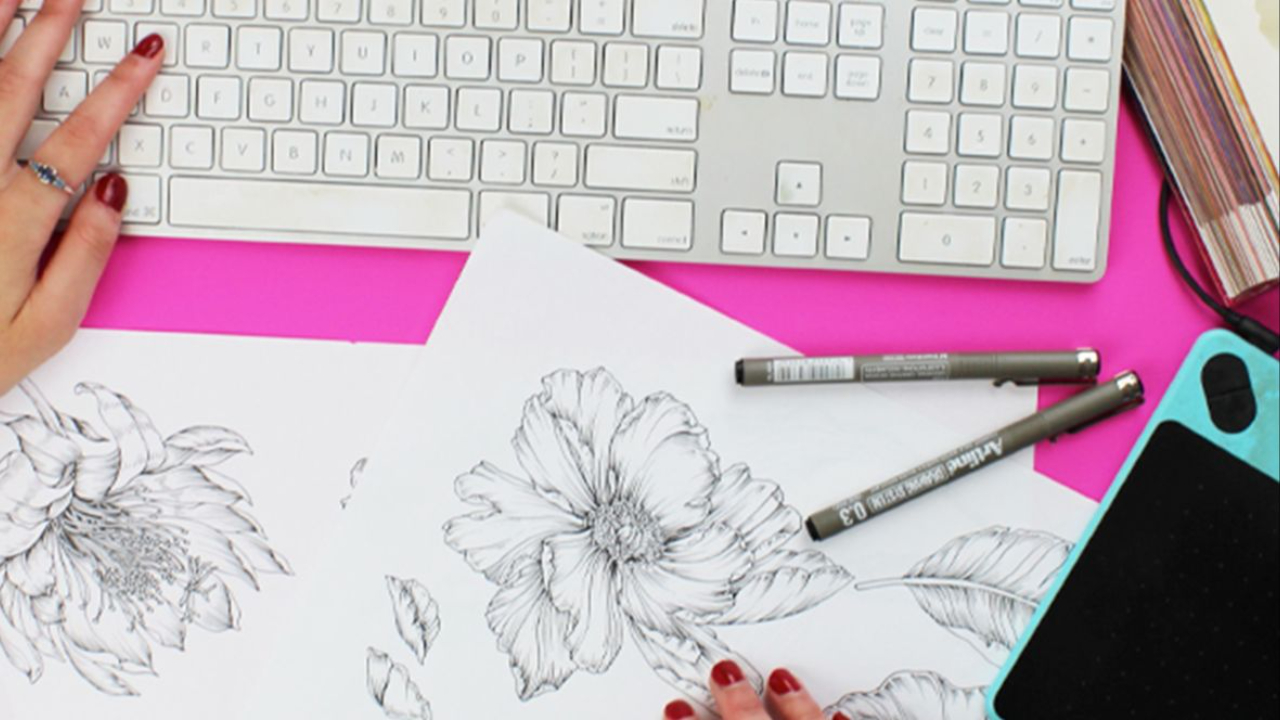
How to Become a Surface Pattern Designer: A Guide from Working Industry Professionals
Mar 25, 2026Thinking about a career in surface pattern design? This guide covers everything you need — from building your skills to finding clients — written by the team at Longina Phillips Designs.
Introduction
Surface pattern design is one of those careers that most people stumble into rather than plan for. You might be an illustrator who discovered that fashion brands buy prints. A textile student who realised there’s a whole industry behind the patterns on your favourite shirt. Or someone who’s been drawing for years and recently wondered if it could become a business.
At The Print School, we’ve taught hundreds of students to make that leap — and our parent studio, Longina Phillips Designs, has been selling original surface patterns to brands like Anthropologie, Zara, H&M, and Seafolly since 1988. So when we talk about how to become a surface pattern designer, we’re not guessing. We’re telling you what actually works.

What Is Surface Pattern Design?
Surface pattern design is the creation of repeat patterns and motifs that are applied to the surface of products — fabric, wallpaper, stationery, homewares, packaging, and more. As a surface designer, you create the artwork that eventually gets printed onto a swimsuit, a bedsheet, a tote bag, or a piece of gift wrap.
It’s a genuinely commercial art form. Unlike fine art, surface pattern design is always created for a specific market, a specific season, and a specific end use. That commercial context is what makes it both challenging and exciting to learn — and why learning from people who work in the industry makes such a difference.
Step 1: Learn the Fundamentals of Drawing and Design
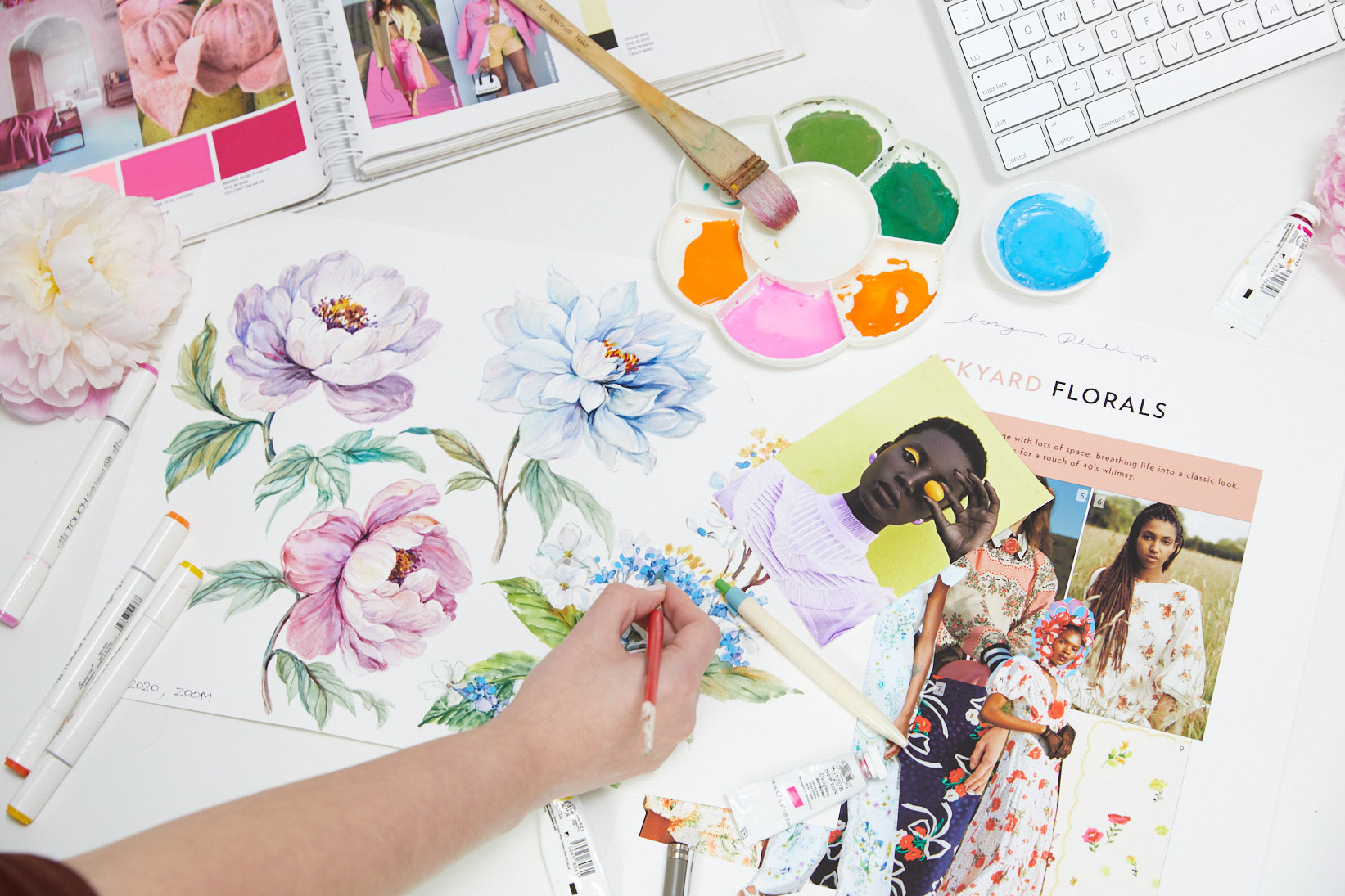
You don’t need to be a classically trained artist to become a surface designer, but you do need to be able to draw. Most successful surface designers work from hand-drawn sketches, gouache paintings, or watercolour illustrations that they then scan and develop digitally in Photoshop or Illustrator.
The key skills to develop at this stage are: creating clean, scalable motifs; understanding proportion and negative space; and building a library of original artwork you can return to across multiple collections. Our Beginners Course for Surface Design walks you through this entire process from scratch — from the first pencil sketch to a finished, repeating digital pattern.
Step 2: Master Photoshop for Repeat Patterns
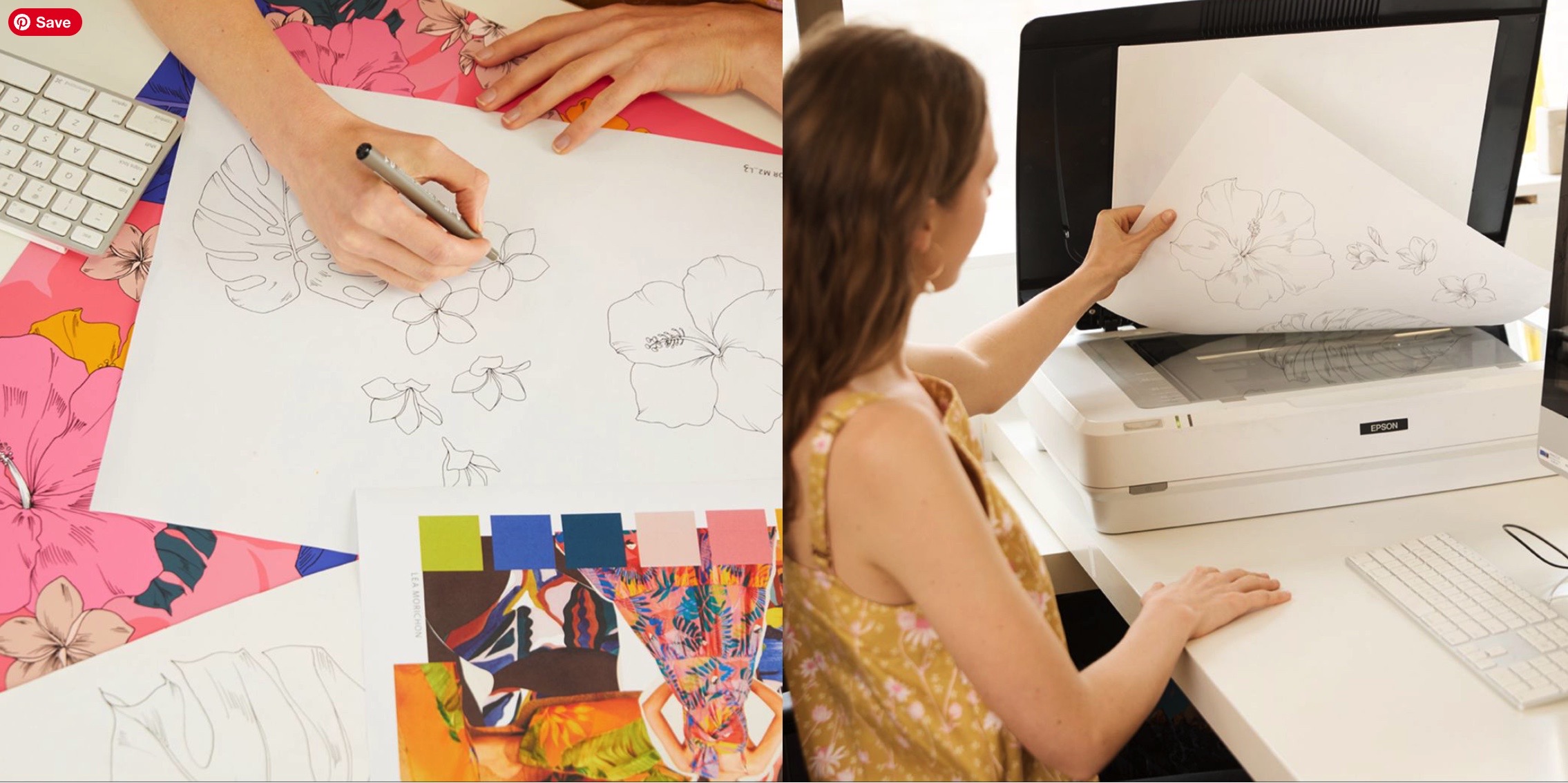
Photoshop is the industry-standard tool for surface pattern design. Learning to build seamless repeats, stunning artwork, and prepare files for commercial print production are non-negotiable skills if you want to sell your designs professionally.
The most important technical skill is the repeat — the process of arranging your motifs so they tile seamlessly in any direction. There are several types of repeat (not all of them viable), and knowing when and how to use each one is what separates amateur work from commercially viable designs. Our Complete Repeats Course covers every repeat type in depth, with industry-standard Photoshop techniques.

Step 3: Understand Colour Theory for Print
Colour is what sells a print. Before a buyer even looks at the motifs, they respond to the colourway. Understanding how to build balanced, commercially appealing colour palettes — and how to colour-separate them correctly for different print methods — is one of the most valuable skills you can develop.
Colour theory for surface design is different from general colour theory. You’re not just thinking about what looks beautiful — you’re thinking about what works for a specific season, a specific market, and a specific print method. Our Colour Theory for Surface Design course covers all of this in a practical, applied way.
Step 4: Build a Portfolio That Gets You Work
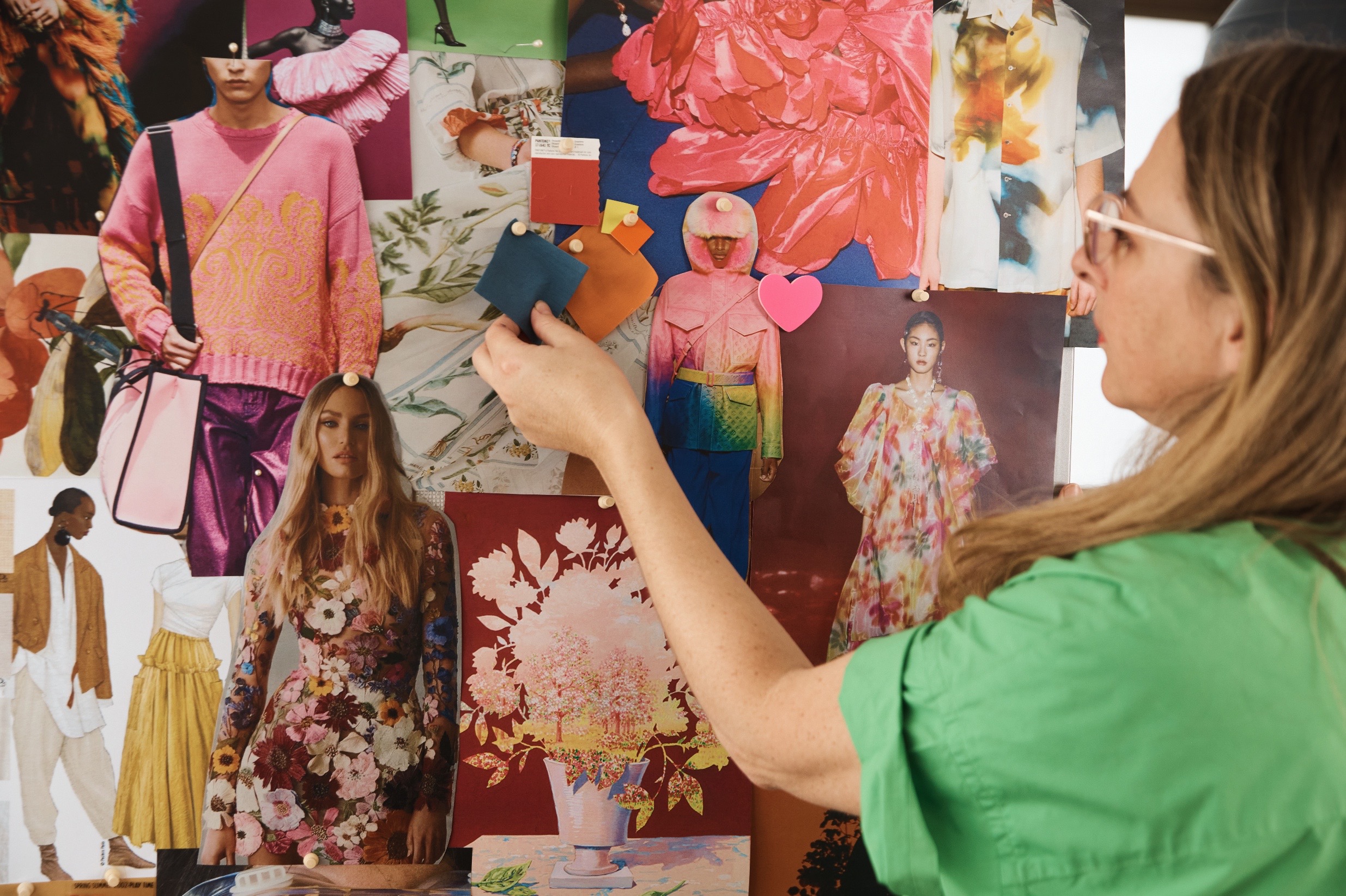
Your portfolio is your shop window. It needs to show range (multiple colourways, multiple scales, multiple print types), commercial awareness (designs that look like they belong in real retail), and a consistent point of view.
Most new designers make the mistake of showing everything they’ve ever made. Buyers want to see a curated collection that feels cohesive and on-trend — not a scrapbook. We cover portfolio strategy, presentation, and how to pitch to buyers in our Comprehensive Business Builder and Career Accelerator courses.
Step 5: Know Your Market and Start Selling
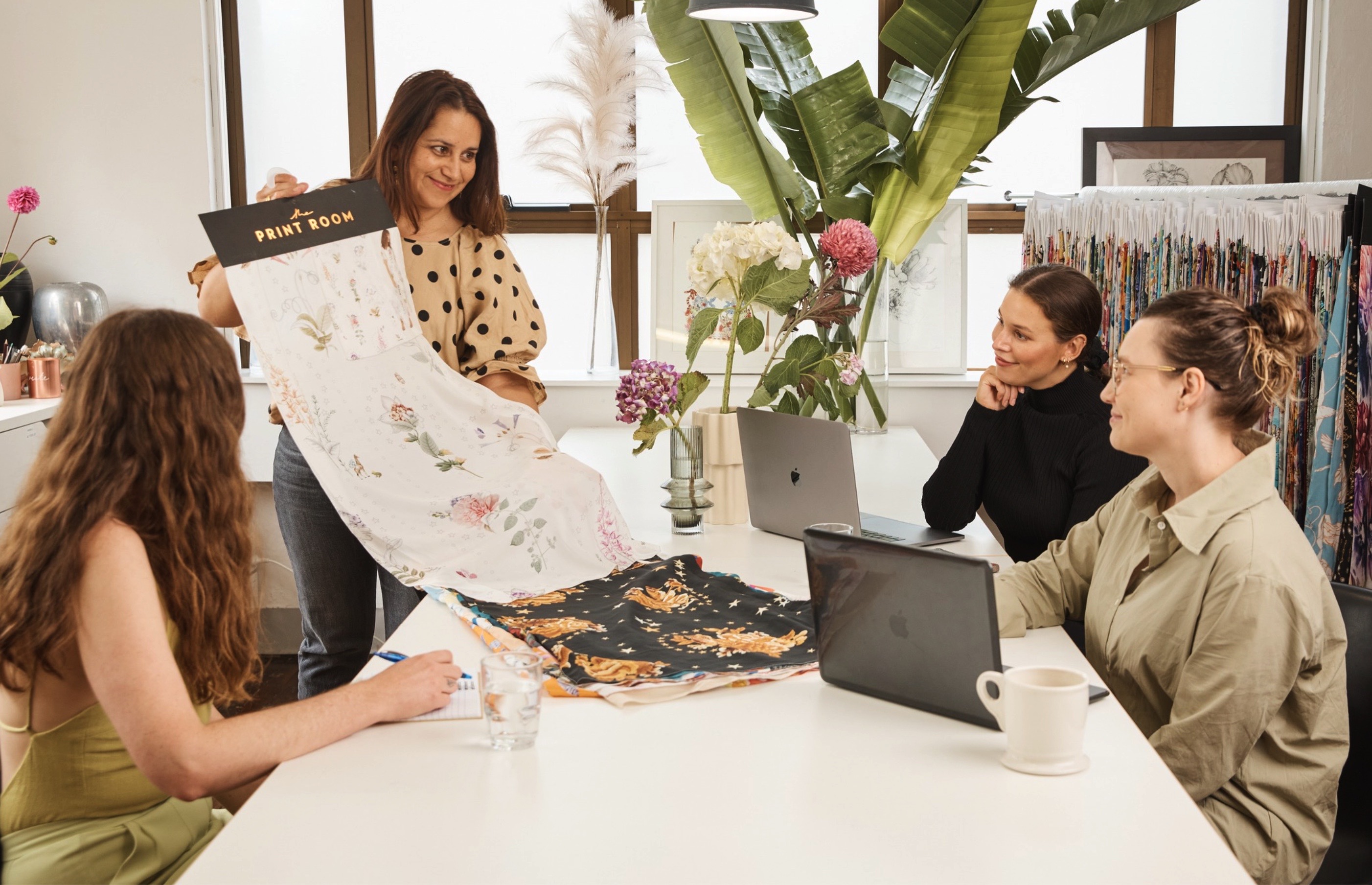
There are several different ways to sell surface patterns as a designer. You can license designs to brands (they pay you a royalty or flat fee to use your artwork), sell direct to manufacturers, work as an in-house or freelance designer for a studio, or sell digital downloads to makers and crafters via platforms like Spoonflower or Society6.
Each market has different requirements, different price points, and different lead times. Understanding which market is right for your style and your goals — and how to approach buyers professionally — is something we go into in depth in the Business Builder course.
How Long Does It Take?
This depends entirely on where you’re starting from and how much time you can invest. Some of our students go from complete beginner to landing their first exclusive deal within a year. Others take longer, and that’s absolutely fine — this is a career that rewards patience and persistence as much as raw talent.
What we do know is that students who learn from people working in the industry — not just design generalists — move faster and make fewer expensive mistakes. That’s why every course at The Print School is built around real commercial experience, not just design theory.
Ready to Start?
If you’re not sure which course is right for you, start with our Course Directory — it maps our courses from complete beginner through to career-level, so you can find your entry point and build from there. You can also reach out to us directly at info@theprintschool.com and we’ll point you in the right direction.
Stay connected with news and updates!
Join our mailing list to receive the latest news and updates from our team.
Don't worry, your information will not be shared.
We hate SPAM. We will never sell your information, for any reason.
